
CSE: RAIN · Critical minerals technology for complex brines
Lithium extraction engineered for the hardest salars.
Rain City combines extraction technology, lithium phosphate output, regional partnerships, and public-market access around the salars where speed, water stewardship, and chemistry matter most.
View TechnologyCSE: RAIN · Critical minerals technology for complex brines
Lithium extraction engineered for the hardest salars.
Rain City combines extraction technology, lithium phosphate output, regional partnerships, and public-market access around the salars where speed, water stewardship, and chemistry matter most.
AC²ME™ is a modular cavitation-electrolysis platform designed to convert high-impurity brines into lithium phosphate while reducing reliance on evaporation ponds, freshwater, and long processing cycles.
ExchangeCSE: RAIN
Core platformAC²ME™
Primary pathwayLi3PO4
Validation stagePilot scale-up
Module basis~5,000 TPA LCE
Investment Thesis
A validation-led route to lower-impact lithium supply.
The investment thesis is built around staged technical validation, disciplined deployment, and the ability to connect process development with resource opportunities and commercial partners.
View thesis drivers
Battery supply chain exposure
Exposure to lithium feedstocks and precursor pathways through a direct lithium phosphate route potentially aligned with LFP cathode manufacturing.
Differentiated extraction architecture
AC²ME™ integrates hydrodynamic cavitation, selective precipitation, and electrolysis to condition complex brines without relying on ponds as the core separation mechanism.
Lower-impact design basis
The process targets very low freshwater use, smaller land disturbance, and treated brine streams that can support reinjection or reuse where site conditions allow.
Institutional execution network
Technical, academic, government, and market-infrastructure relationships support validation, permitting readiness, and regional deployment.
Problem Statement
The highest-value brines are often the hardest to process.
Commercially useful brines can carry impurity loads that stress conventional evaporation and many DLE systems, especially where water, land, and permitting constraints are tight.
View processing constraints
Technical challenges
- Magnesium-to-lithium ratios in complex brines can reach up to ~30:1.
- Calcium-to-lithium ratios can exceed ~6:1 in certain salar systems.
- High Mg, Ca, salinity, and other impurity loads increase separation complexity and reagent consumption.
ESG challenges
- Evaporative routes are frequently cited at ~600,000 L/t LCE or higher in arid regions, depending on the water boundary used.
- Adsorption DLE is reported at ~71 m³/t freshwater intensity in selected Hombre Muerto operations.
- Community acceptance hinges on transparent stewardship of water, brines, and land.
Operational constraints
- Evaporative cycles often require 12-18 months before downstream conversion.
- Large pond systems can require extensive salar surface disruption.
- Project economics depend on permitting, brine chemistry, power, infrastructure, and scale.

AC²ME™ Technology
A chemistry-first process for impurity-heavy brines.
AC²ME™ is designed to condition brines, remove problem ions, generate process inputs, and recover lithium phosphate through an integrated modular flow.
Live process Hydrodynamic cavitation in action — controlled collapse events altering brine chemistry at the micro-scale.
Brine characterization
Brine chemistry is profiled for lithium concentration, Mg/Li, Ca/Li, salinity, and other ions that influence separation design.
Cavitation energy
Engineered flow geometries create vapor cavities. Collapse events can generate transient local hot spots in the thousands of degrees Celsius and high localized pressure; these are micro-scale effects, not bulk-fluid conditions.
Selective precipitation
The process is designed to precipitate or condition Mg, Ca, and other potentially valuable species while keeping lithium in solution for targeted recovery.
Electrolysis integration
Electrolysis may support pH control, NaOH generation, and reagent-loop optimization within a more circular process configuration.
Polishing and recovery
A resin polishing stage may be used after lithium phosphate formation where pilot data indicates recovery, selectivity, or product quality can be improved.
Validation framework
Laboratory results validate the chemical pathway. Continuous-flow pilot operations are required to confirm commercial recovery rates, water balance, and energy intensity.
Lab chemistry and proof-of-concept data
Pilot continuous-flow performance and water balance
Commercial bankable engineering, permits, offtake, and operating data
Pilot Track Record
Pennsylvania pilot, South American brine validation next.
Rain City presents the Pennsylvania pilot as a prior operating datapoint with a defined scope. The next milestone is continuous testing with complex South American brines, where performance must be validated using actual brine chemistry from salars.
Pennsylvania pilot campaign targeted at continuous operation under the tested conditions; records are used as prior operating context, not salar-brine validation.
The Pennsylvania pilot is presented as a limited operating datapoint under its tested conditions, not as validation in salar brines.
Continuous testing with South American brines is the critical next step for validating recovery, impurity removal, water balance, and product quality.
Hydrodynamic cavitation converts hydraulic energy into intense localized pressure and thermal effects, potentially reducing external thermal requirements and supporting materially lower energy consumption than adsorption-based DLE systems. The resulting energy profile remains subject to pilot-scale validation under representative operating conditions.
Reinjection engineering: AC²ME™ spent brine is expected to be a treated chloride stream after Mg, Ca, and Sr removal, a composition intended to reduce carbonate scaling and formation-damage risk. Final reinjection design remains site-specific and subject to pilot data, reservoir modelling, and permitting.
Designed to shorten brine-to-precursor timing versus evaporation cycles measured in months.
Designed for very low or near-zero freshwater consumption, subject to site-specific brine and process configuration.
Target recovery range based on internal work and engineering assumptions; independent pilot validation is required.
Internal design target per 5,000 Tpa module. Final capital intensity depends on brine grade, infrastructure, energy, civil works, and jurisdiction.
Competitive Positioning
How AC²ME™ compares to established methods.
Indicative figures for a 5,000 TPA LCE facility across capital, footprint, processing time, water intensity, and recovery. AC²ME figures are pre-commercial design targets pending independent pilot validation.
Parameter
Solar Evaporation
DLE Adsorption
AC²ME target
CAPEX 5,000 Tpa LCE
$300M – $800M
$120M – $1,300M
~$55M
Land footprint
20 – 40 km²
2 – 5 km²
0.25 km²
Processing time
12 – 18 months
Hours – Days
Minutes – Hours
Li recovery target
40 – 50%
70 – 90%
85 – 95%+
Freshwater intensity
~600,000 L/t LCE
~71 m³/t
Minimal / Near-zero
Commercial by-products
None
Limited
Mg(OH)₂, CaCO₃
Input self-generation
No
No
Partial NaOH offset via electrolysis
Comparative data sourced from publicly available industry reports and internal engineering estimates. Figures are indicative only. AC²ME targets have not yet been independently validated at pilot scale.
Market Opportunity
Lithium demand scenarios continue to test the supply base.
Even conservative scenarios point to a supply base that must expand faster, with cleaner projects, better traceability, and more diversified processing capacity.
Selected industry estimates project global lithium demand approaching this level by 2030.
Some scenarios indicate announced supply may cover only about half of future requirements without faster project delivery.
Chile, Argentina, and Bolivia are frequently cited as hosting a majority of global lithium resources; exact share varies by classification.
Selected market research forecasts LFP battery market growth from the mid-$20B range to the high-$70B range by 2034.
2020
0 million tonnes LCE
2022
0 million tonnes LCE
2026
0 million tonnes LCE
2030 Scenario
0 million tonnes LCE
Million tonnes LCE · Industry estimates — not confirmed projections · Supply gap risk between 2026 trajectory and 2030 scenario demand.
Supply Chain Concentration
A structural vulnerability accelerating diversification.
Battery supply chains remain concentrated across production, cathode manufacturing, and processing know-how. That concentration increases the value of traceable lithium supply from politically diverse jurisdictions.
Of global lithium-ion battery production is concentrated in a single country, per industry and agency estimates.
Of global LFP cathode manufacturing capacity is estimated to sit in one jurisdiction — the chemistry defining a growing share of new deployments.
Supplied by Chile (~54%) and Argentina (~43%) — underscoring the Lithium Triangle's strategic weight for diversified supply.
Regional lithium-ion battery demand is projected to grow through 2032, with LFP chemistry well suited to stationary storage and cost-sensitive deployments.
Outputs and Circular Economy
One brine stream, multiple value pools.
AC²ME™ is designed to produce lithium phosphate while turning impurity removal and internal reagent generation into potential economic advantages.
Native salar brine feedstock.
Physics-driven conditioning.
Selective mineral precipitation.
Chemical input generation.
Li3PO4, industrial minerals, internal process inputs, and treated brine.
Lithium phosphate
The system targets direct lithium phosphate (Li3PO4) production as a potential precursor for LFP manufacturing, reducing dependence on intermediate carbonate or hydroxide conversion. Internal testing has indicated approximately 97% lithium phosphate purity; this remains preliminary until independently validated at pilot scale.
Direct from brine / potential LFP precursor / no carbonate or hydroxide intermediateMagnesium hydroxide
Expected to be produced via selective precipitation of magnesium-bearing species. Potential industrial applications include environmental treatment, flame retardants, construction materials, and specialty chemical uses, subject to purity and market validation.
Calcium carbonate
Expected to be produced through mineral separation of calcium-bearing species. Potential multi-industry applications include fillers, construction materials, agriculture, and industrial minerals markets, subject to product specification.
Sodium hydroxide
Generated via integrated electrolysis. Designed for internal process use and partial replacement of required inputs rather than as a standalone commercial product.
Treated brine for reinjection or reuse evaluation
The process also produces a treated brine stream designed for site-specific reinjection or reuse evaluation, with reduced Mg/Ca content and lower salinity after electrolysis. Potential reinjection or reuse remains subject to site-specific hydrogeological modelling, chemical compatibility assessment, scaling evaluation, permitting, and pilot validation.
Modular Strategy
Scale only after the chemistry earns it.
The commercialization path is staged: validate real brines first, qualify a repeatable module, then expand across compatible salars and partner jurisdictions.
Module sizing is indicative and subject to pilot results, engineering design, brine grade, and available feed volumes.
Compact plant architecture may reduce land disturbance relative to large evaporation systems.
Preliminary estimate only; final capital intensity depends on power, infrastructure, civil works, brine chemistry, product specification, and jurisdiction.

Enhanced pilot / South American brines
Continuous pilot work with regional brines to validate recovery, water balance, energy intensity, product purity, and impurity removal under real salar conditions.
First commercial module
~5,000 TPA LCE with direct Li₃PO₄ production. Subject to financing, permitting, technical validation, definitive agreements, and local approvals.
Multi-module expansion
Scale by repeating qualified modules across compatible brine resources and partner jurisdictions — ~0.25 km² footprint per unit.
Regional technology platform
A consolidated multi-jurisdiction platform aligned with sovereign industrialization, offtake, and energy storage supply chains.
Regional Platform
One geological region, three points of entry.
Rain City approaches the Lithium Triangle as one geological system with three distinct operating contexts, each requiring a different mix of validation, partnership, and institutional alignment.
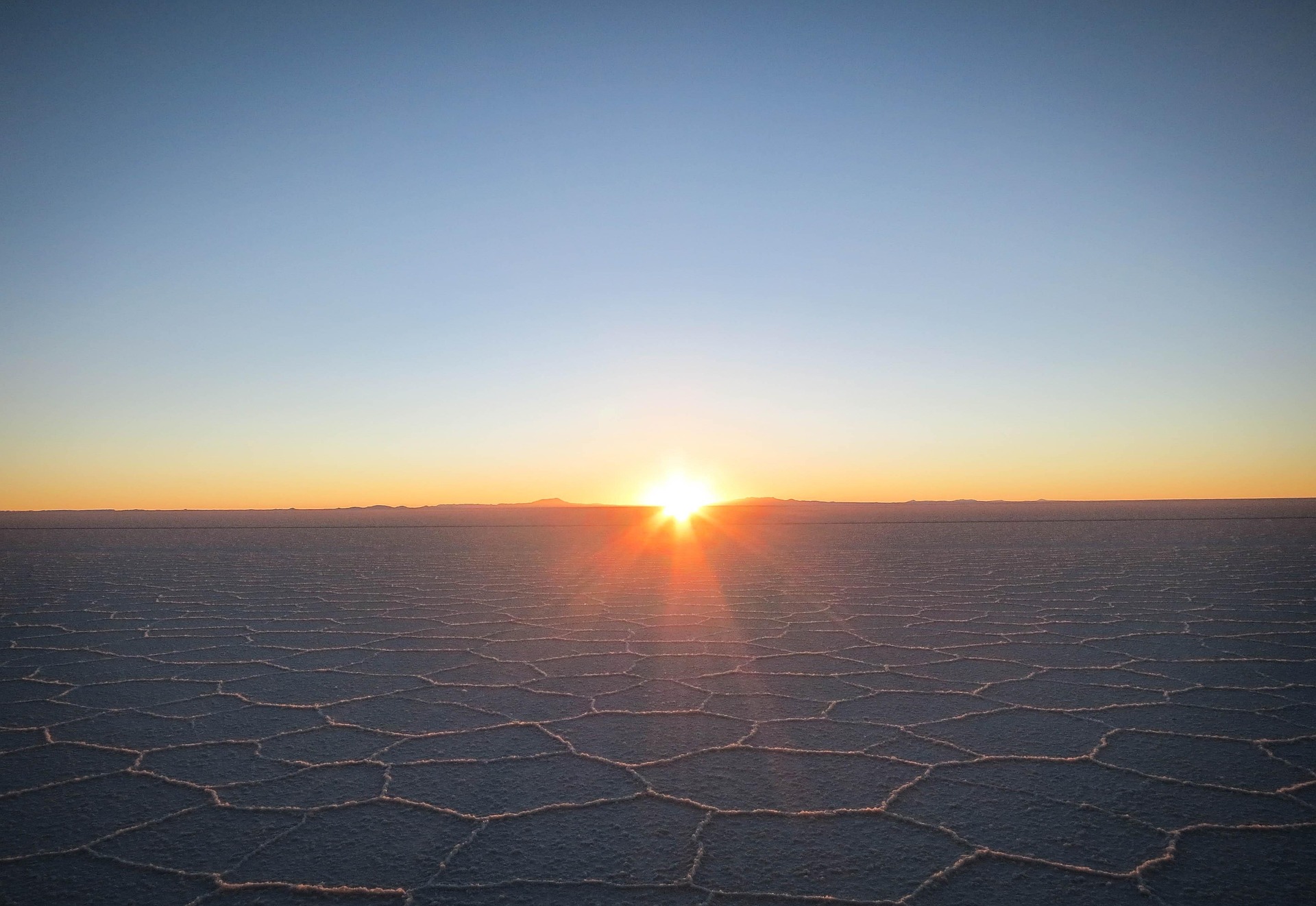
Identified lithium resources across Chile, Argentina, and Bolivia — roughly half of the world's known resources (USGS-based estimates).
Exploration access in northwest Catamarca — Salar de Antofalla and Salar de Hombre Muerto — through a 50/50 joint venture with Lithium Argentina Investments.
Active technical and institutional relationships simultaneously in Chile, Argentina, and Bolivia — a distinctive multi-jurisdiction position within the emerging DLE landscape.

View country entry points
Chile — Validation in the most sophisticated ecosystem
- The Triangle's highest institutional maturity, ESG standards, and density of global lithium actors.
- Salars with Mg/Li ratios up to ~30:1 and Ca/Li above ~6:1 — demonstrating AC²ME™ here is a calling card for the entire region.
- Alliances with AMTC (Universidad de Chile), Pontificia Universidad Católica, Fraunhofer Chile — announced May 2026, covering validation, piloting, renewables integration, circular economy, and sustainability assessment — and CIL Lithium.
Argentina — Territorial assets and industrial alliances
- The Triangle's growth engine, with production expansion projected at ~14% CAGR through 2035.
- 150,000+ ha exploration portfolio in northwest Catamarca — Antofalla and Hombre Muerto — in direct proximity to the industry's major active projects.
- Agreement with YPF / Y-TEC (CONICET) and collaboration with the National University of Catamarca for regional brine processing.
Bolivia — Demonstration in the most demanding geology
- ~23 million tonnes of lithium resources (USGS 2025), concentrated in Salar de Uyuni — the world's largest salt flat and the Triangle's toughest geochemistry.
- Institutional cooperation with YLB within Bolivia's sovereign framework for strategic resources.
- Collaboration with Elemental — the practice founded by Pritzker Prize laureate Alejandro Aravena — on a concept integrating an R&D centre, an energy and lithium museum, and a community centre.
Strategic Alliances
Technical, academic, and institutional relationships.
Rain City's alliance network connects process engineering, academic validation, state lithium stakeholders, and market infrastructure.
Technical Partner
 Ion Source
 Advanced Mining Technology Center
 Pontificia Universidad Catolica de Chile
 Y-TEC (CONICET / YPF)
 Yacimientos de Litio Bolivianos
 Fraunhofer Chile Research
 CIL Lithium
 ZERO13 (GMEX Group)
Ion Source
Technical and engineering collaboration for extraction systems and critical minerals processing.
Academic Partner
Advanced Mining Technology Center
University of Chile mining technology center focused on applied research and sustainable mining.
Academic Partner
Pontificia Universidad Catolica de Chile
Leading Chilean university and research ecosystem for science, engineering, and public policy collaboration.
Institutional Partner
Y-TEC (CONICET / YPF)
Argentine technology company linking national science and energy-sector innovation.
Institutional Partner
Yacimientos de Litio Bolivianos
Bolivia's state lithium company and core stakeholder in responsible lithium industrialization.
Institutional Partner
Fraunhofer Chile Research
Applied research partner for sustainable mining, process validation, renewable energy, and technology transfer.
Institutional Relationship
CIL Lithium
Member and official sponsor relationship with the International Chamber of Lithium and Energies, supporting industry dialogue and regional collaboration.
Strategic Partner
ZERO13 (GMEX Group)
Award-winning digital market infrastructure for sustainable real-world assets — connecting critical minerals, carbon markets, and institutional capital through regulated issuance, trading, and settlement rails.
ESG & On-Chain Traceability
Verifiable operations, not just declarations.
Through the alliance with ZERO13, Rain City is designing verifiable operating records for water, energy, carbon, production, and product quality as future customers and regulators demand greater minerals traceability.
View traceability framework
Water consumption
An immutable, verifiable record of water used — or not used — at every stage of the process, demonstrating in real time the minimal-to-zero consumption profile AC²ME™ is designed to deliver.
Energy consumption
On-chain monitoring of energy per module, including heat generated by the cavitation process, with breakdown by source and certification of renewables integration where applicable.
Carbon footprint
Continuous CO₂ accounting from extraction to Li₃PO₄ delivery — generating a carbon passport per production batch.
Production and quality
Full traceability of the lithium phosphate produced — volume, purity, brine origin, and process conditions — forming an auditable record that travels with the product to the final off-taker.
About Us
About Rain City Resources.
Rain City Resources Inc. is a publicly listed lithium technology and resource development company focused on advancing innovative solutions for the next generation of lithium production.
Integrated lithium platform
AC²ME™ anchors the company’s technology platform, with lithium phosphate positioned as its target product pathway and modular development intended to support staged technical and commercial validation.
Pathways toward scale
The company is building a technology-driven platform designed to connect advanced lithium extraction with resource opportunities, scientific validation, strategic partnerships, and pathways toward commercial-scale development.
Vision
A faster, lower-impact, and more regionally integrated lithium supply chain — built alongside the communities, institutions, and governments that shape the Lithium Triangle.
Mission
To validate and commercialize AC²ME™ through rigorous science, disciplined capital formation, and ESG-compliant resource development that meets the expectations of institutional stakeholders.
Leadership
Leadership & Board of Directors.
Combining extensive mining sector leadership, public company governance, and advanced chemical engineering.
Executive
Board
Benjamin Hill
Chief Executive Officer & Director
Chairman
Board
Dr. David A. Shaw
Chairman of the Board
Executive
Board
Dr. Ian Hutcheon
Director & Technical Advisor
Executive
Sebastián Quiñones
Head of Latin America
Executive
Jacqueline Danforth
Chief Financial Officer & Corporate Secretary
Board
Bernadette D'Silva
Director
Board
Murray Tevlin
Director
Investors
A public vehicle for validation-gated growth.
Rain City Resources Inc. trades on the Canadian Securities Exchange under CSE: RAIN.
Investment Thesis
Five value-capture pathways.
If AC²ME™ is validated under real brine conditions, Rain City can pursue several complementary routes to value. Each depends on technical results, definitive agreements, financing, and regulatory approvals.
Technology provider
Licensing AC²ME™ to existing Lithium Triangle operators, with royalty streams on production.
Industrial partner
Joint ventures with established producers, energy companies, or battery manufacturers — including project participation in exchange for technology.
Asset developer
Own production from the Argentine portfolio, capturing the full operating margin at Antofalla and Hombre Muerto.
Certified ESG supply
Li₃PO₄ positioned as a potential LFP manufacturing precursor, with on-chain verification of water, energy, carbon, and production through ZERO13.
Sovereign cooperation
Joint development models with state actors within sovereign frameworks — such as the institutional relationship with YLB in Bolivia.
Latest News
Recent disclosure from Rain City.
Live feed of the Company's most recent news releases, sourced directly from Newsfile.
Announcements
News releases and CSE disclosure.
Newsfile profile CSE listingMarket References
Critical minerals and lithium market context.
IEA outlook USGS lithium dataInvestor FAQ
Questions we hear most often.
Direct lithium extraction remains an evolving field. These answers separate what Rain City has validated from what still needs to be proven.
Contact
Engage with Rain City.
For investor relations, strategic partnerships, government engagement, technology validation, or media inquiries, contact the corporate team.